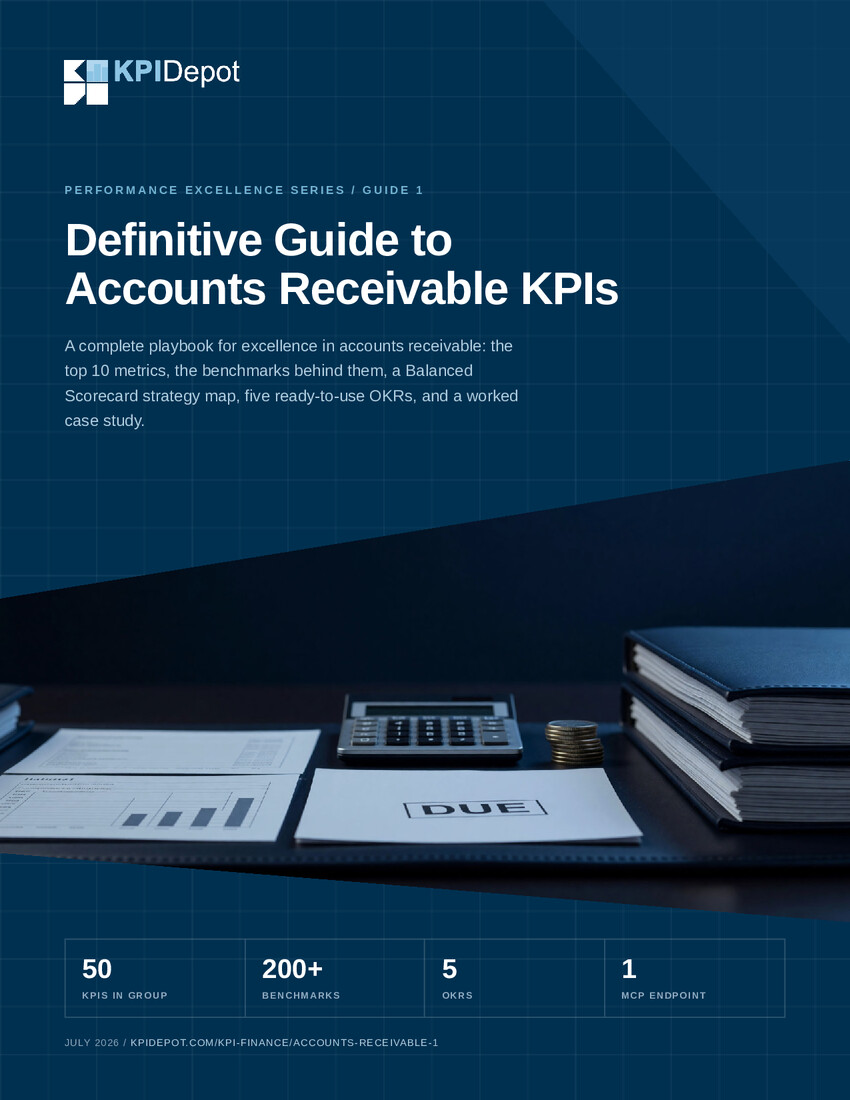
12 Most Important Accounts Receivable KPIs
The top KPIs for Accounts Receivable are essential as they provide actionable insights into the efficiency and effectiveness of a company's credit and collection processes. By tracking metrics such as Days Sales Outstanding (DSO), Collection Effectiveness Index (CEI), and aging categories, organizations can assess the speed at which they are converting receivables into cash, identify potential cash flow issues, monitor customer payment performance, and strategize improvements.
These indicators help manage working capital more efficiently, reduce the risk of bad debt, and ultimately underpin the company's financial health and ability to reinvest in growth opportunities.
This article showcases the Most Critical 12 KPIs for Accounts Receivable and Associated Benchmarks.
1. Days Sales Outstanding (DSO)
Days Sales Outstanding (DSO) gauges how quickly billed revenue converts into cash, acting as an early barometer of liquidity risk.
A rising DSO often foreshadows tighter working-capital headroom that forces managers to tap costly credit lines. Top-quartile companies compress DSO by embedding real-time analytics in their order-to-cash workflow, cutting financing costs by up to 30% (PwC).
Sustained improvement here frees cash for growth initiatives without diluting shareholders. Learn more about the Days Sales Outstanding (DSO) KPI.
View Common Pitfalls
View Improvement Levers
We have 5 benchmarks for this KPI available in our database.
Related KPI Categories
2. Collection Efficiency
Collection Efficiency is a critical metric for assessing how effectively a company converts receivables into cash, directly impacting liquidity and operational efficiency.
High collection efficiency can enhance financial health, reduce reliance on external financing, and improve ROI metrics. Organizations that optimize this KPI often see a stronger cash flow, enabling investment in growth initiatives and strategic alignment with long-term goals.
Learn more about the Collection Efficiency KPI.
View Common Pitfalls
View Improvement Levers
We have 4 benchmarks for this KPI available in our database.
3. Average Collection Period
Average Collection Period (ACP) is critical for assessing a company's cash flow efficiency.
It measures the average number of days it takes to collect payment after a sale, influencing liquidity and operational efficiency. A shorter ACP indicates effective credit management and customer relations, while a longer ACP can signal potential cash flow issues.
This KPI directly impacts working capital, enabling businesses to invest in growth opportunities. Learn more about the Average Collection Period KPI.
View Common Pitfalls
View Improvement Levers
We have 9 benchmarks for this KPI available in our database.
Related KPI Categories
4. Receivables Turnover Ratio
Receivables Turnover Ratio is critical for assessing a company's efficiency in managing its receivables.
This KPI directly influences cash flow, operational efficiency, and overall financial health. A higher ratio indicates effective credit policies and timely collections, while a lower ratio may signal potential liquidity issues.
Companies that prioritize this metric can enhance their cash position, enabling investments in growth initiatives. Learn more about the Receivables Turnover Ratio KPI.
View Common Pitfalls
View Improvement Levers
We have 1 benchmark for this KPI available in our database.
5. Cash Conversion Efficiency
Cash Conversion Efficiency (CCE) measures how effectively a company turns its investments into cash flow from operations.
This KPI is crucial for maintaining financial health, as it directly influences liquidity and operational efficiency. A higher CCE indicates that a business is effectively managing its receivables and payables, leading to improved cash flow.
Conversely, a low CCE can signal inefficiencies that may hinder growth initiatives. Learn more about the Cash Conversion Efficiency KPI.
View Common Pitfalls
View Improvement Levers
We have 3 benchmarks for this KPI available in our database.
6. Payment Delinquency Rate
Payment Delinquency Rate is a critical KPI that measures the percentage of overdue payments, directly impacting cash flow and operational efficiency.
High delinquency rates can strain liquidity, forcing companies to rely on costly financing options. By tracking this metric, organizations can better manage credit risk and improve overall financial health, ultimately enhancing profitability and growth.
Learn more about the Payment Delinquency Rate KPI.
View Common Pitfalls
View Improvement Levers
We have 5 benchmarks for this KPI available in our database.
7. Write-Off Rate
Write-Off Rate measures the proportion of receivables deemed uncollectible, directly impacting cash flow and profitability.
A high write-off rate can signal poor credit management and operational inefficiencies, leading to increased financial risk. Organizations that effectively track this KPI can enhance their financial health, improve cost control metrics, and make data-driven decisions to optimize collections processes.
Learn more about the Write-Off Rate KPI.
View Common Pitfalls
View Improvement Levers
We have 3 benchmarks for this KPI available in our database.
8. Bad Debt to Sales Ratio
Bad Debt to Sales Ratio serves as a critical performance indicator that reflects the financial health of an organization.
It directly influences cash flow management, operational efficiency, and overall profitability. A high ratio signals potential issues in credit management and customer payment behaviors, which can strain resources.
Conversely, a low ratio indicates effective credit policies and strong collections processes. Learn more about the Bad Debt to Sales Ratio KPI.
View Common Pitfalls
View Improvement Levers
We have 8 benchmarks for this KPI available in our database.
9. Accounts Receivable to Sales Ratio
The Accounts Receivable to Sales Ratio serves as a critical performance indicator for assessing a company's financial health and operational efficiency.
It directly influences cash flow management, working capital optimization, and overall profitability. A high ratio may indicate inefficient collections processes or credit policies, while a low ratio suggests effective cash conversion strategies.
Executives can leverage this KPI to drive data-driven decisions, ensuring strategic alignment with financial goals. Learn more about the Accounts Receivable to Sales Ratio KPI.
View Common Pitfalls
View Improvement Levers
We have 1 benchmark for this KPI available in our database.
10. Aging of Accounts Receivable
Aging of Accounts Receivable (A/R) is a critical KPI that reflects the efficiency of cash flow management.
It directly influences liquidity, operational efficiency, and overall financial health. By monitoring A/R aging, organizations can identify potential cash flow issues and enhance forecasting accuracy, ultimately driving better business outcomes.
Learn more about the Aging of Accounts Receivable KPI.
View Common Pitfalls
View Improvement Levers
We have 6 benchmarks for this KPI available in our database.
11. Customer Payment Performance Score
Customer Payment Performance Score is a crucial KPI that reflects the efficiency of cash flow management and customer payment behavior.
It directly influences financial health, operational efficiency, and overall ROI metric for the organization. A high score indicates timely payments, which can enhance liquidity and reduce reliance on credit.
Conversely, a low score may signal underlying issues in billing processes or customer satisfaction. Learn more about the Customer Payment Performance Score KPI.
View Common Pitfalls
View Improvement Levers
We have 3 benchmarks for this KPI available in our database.
12. Monthly Collection Target Achievement
Monthly Collection Target Achievement is crucial for assessing cash flow efficiency and overall financial health.
It directly influences working capital management and operational efficiency, impacting the ability to invest in growth initiatives. A well-defined target threshold allows organizations to benchmark performance and make data-driven decisions.
Achieving collection targets can enhance forecasting accuracy and improve ROI metrics. Learn more about the Monthly Collection Target Achievement KPI.
View Common Pitfalls
View Improvement Levers
We have 3 benchmarks for this KPI available in our database.
These 12 Accounts Receivable KPIs were selected to provide a balanced view of cash flow performance, operational efficiency, and credit risk management. They span leading indicators like Payment Delinquency Rate and Customer Payment Performance Score, alongside lagging metrics such as Write-Off Rate and Bad Debt to Sales Ratio. This set covers the full AR cycle from invoicing to cash recovery, enabling comprehensive monitoring of both financial outcomes and collection processes.
Track Days Sales Outstanding (DSO) alongside Collection Efficiency to detect collection bottlenecks: rising DSO with declining Collection Efficiency signals deteriorating cash inflows. Monitor Receivables Turnover Ratio in tandem with Average Collection Period—divergence between these indicates inconsistencies in credit terms enforcement or customer payment behavior. Payment Delinquency Rate correlates with Write-Off Rate; a sustained increase in delinquency often precedes higher write-offs, highlighting credit risk escalation.
Prioritize implementing Days Sales Outstanding, Collection Efficiency, and Payment Delinquency Rate first. These KPIs require readily available data, deliver immediate insights into cash flow health, and flag early warning signs of credit issues. Once established, integrate Receivables Turnover Ratio and Write-Off Rate for deeper operational and financial diagnostics. The full suite of Accounts Receivable KPIs, including advanced metrics, is accessible in the KPI Depot database.
Related Best Practices
These best practice documents below are available for individual purchase from Flevy , the largest knowledge base of business frameworks, templates, and financial models available online.



