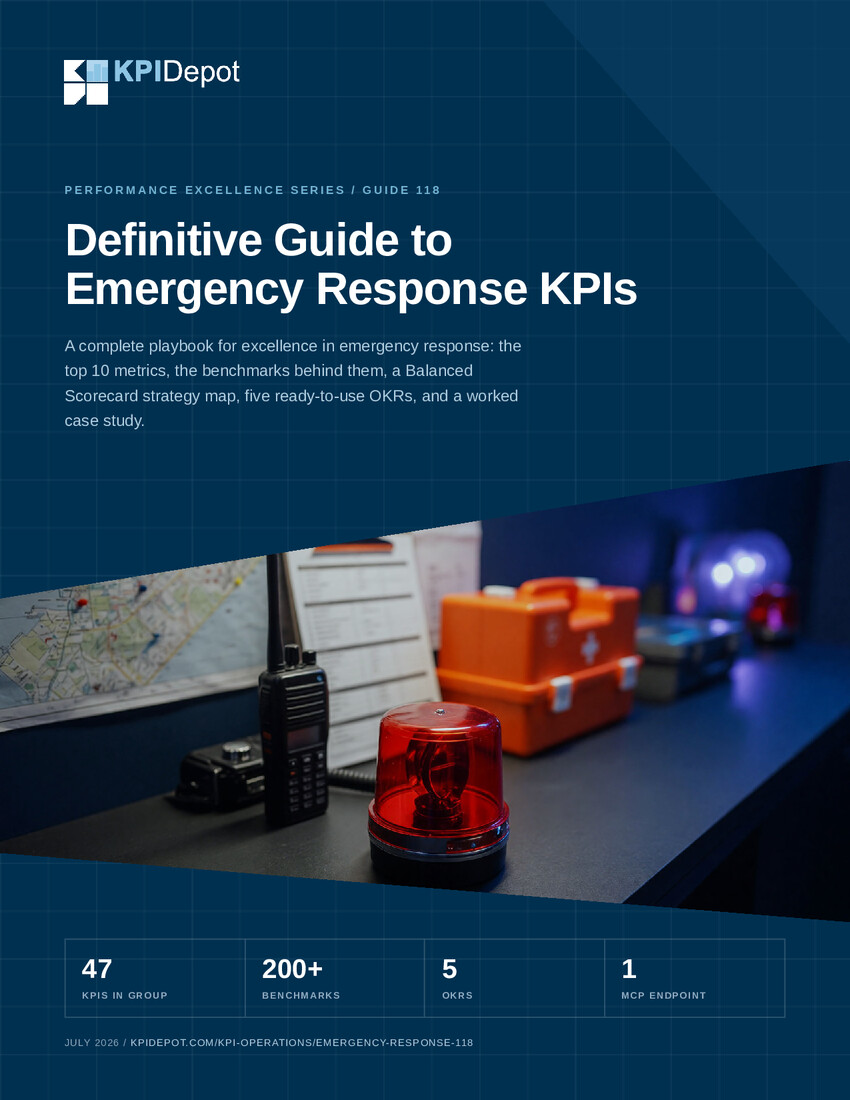
12 Most Important Emergency Response KPIs
The top KPIs are crucial in Emergency Response as they provide quantifiable metrics that guide operational performance and efficiency. By establishing specific, measurable targets, emergency management teams can prioritize their response strategies and allocate resources more effectively.
These indicators help in assessing the speed, accuracy, and quality of responses to emergencies, ensuring that teams meet both internal standards and regulatory requirements.
This article showcases the Most Critical 12 KPIs for Emergency Response and Associated Benchmarks.
1. Emergency Response Time
Emergency Response Time is a critical performance indicator that reflects how swiftly an organization reacts to emergencies, directly influencing operational efficiency and customer satisfaction.
A shorter response time can enhance service delivery, leading to improved customer loyalty and retention. Conversely, delays can escalate risks, resulting in financial losses and reputational damage.
Organizations that prioritize this KPI often see better resource allocation and strategic alignment across departments. Learn more about the Emergency Response Time KPI.
View Common Pitfalls
View Improvement Levers
We have 17 benchmarks for this KPI available in our database.
Related KPI Categories
2. Life-saving Intervention Timeliness
Life-saving Intervention Timeliness is crucial for optimizing patient outcomes and resource allocation in healthcare settings.
This KPI directly influences operational efficiency, patient satisfaction, and financial health. A timely intervention can significantly reduce morbidity and mortality rates, enhancing overall service quality.
Organizations that excel in this metric often see improved patient retention and lower costs associated with emergency care. Learn more about the Life-saving Intervention Timeliness KPI.
View Common Pitfalls
View Improvement Levers
We have 11 benchmarks for this KPI available in our database.
3. Emergency Medical Services (EMS) Response Time
Emergency Medical Services (EMS) Response Time is a critical performance indicator that reflects the efficiency and effectiveness of emergency medical services.
It directly influences patient outcomes, operational efficiency, and overall community health. A swift response can mean the difference between life and death, making this metric vital for resource allocation and strategic alignment.
Organizations that track results effectively can optimize their service delivery, ensuring that they meet target thresholds. Learn more about the Emergency Medical Services (EMS) Response Time KPI.
View Common Pitfalls
View Improvement Levers
We have 4 benchmarks for this KPI available in our database.
View Emergency Medical Services (EMS) Response Time Benchmarks
4. Emergency Call Answering Speed
Emergency Call Answering Speed is a critical performance indicator that reflects the efficiency of emergency response systems.
Faster response times can significantly enhance public safety and improve community trust. This KPI influences operational efficiency, customer satisfaction, and resource allocation.
Organizations that prioritize this metric often see improved financial health and a stronger alignment with strategic goals. Learn more about the Emergency Call Answering Speed KPI.
View Common Pitfalls
View Improvement Levers
We have 4 benchmarks for this KPI available in our database.
5. Emergency Response Effectiveness
Emergency Response Effectiveness is critical for assessing how well organizations respond to crises, directly impacting operational efficiency and financial health.
A strong performance in this KPI can lead to improved stakeholder trust and reduced recovery costs. Organizations that excel in emergency response can minimize downtime and maintain service continuity, ultimately enhancing customer satisfaction.
This KPI serves as a leading indicator of an organization's resilience and preparedness for unforeseen events. Learn more about the Emergency Response Effectiveness KPI.
View Common Pitfalls
View Improvement Levers
We have 2 benchmarks for this KPI available in our database.
6. Emergency Resource Availability Ratio
Emergency Resource Availability Ratio (ERAR) is crucial for assessing an organization's readiness to respond to crises.
This KPI directly influences operational efficiency and financial health, ensuring resources are allocated effectively during emergencies. High ERAR values indicate robust preparedness, while low values can expose vulnerabilities that jeopardize business continuity.
Organizations leveraging ERAR can optimize resource allocation, enhance response times, and ultimately improve overall business outcomes. Learn more about the Emergency Resource Availability Ratio KPI.
View Common Pitfalls
View Improvement Levers
We have 6 benchmarks for this KPI available in our database.
7. Public Evacuation Efficiency
Public Evacuation Efficiency is a critical KPI that measures how effectively organizations can manage and execute evacuation procedures during emergencies.
High efficiency in evacuations can significantly reduce risks to human life and property, while also enhancing overall operational efficiency. This metric influences business outcomes such as safety compliance, risk management, and crisis response effectiveness.
Organizations that excel in this area often see improved financial health and reduced liability costs. Learn more about the Public Evacuation Efficiency KPI.
View Common Pitfalls
View Improvement Levers
We have 3 benchmarks for this KPI available in our database.
8. Public Warning Timeliness
Public Warning Timeliness is crucial for effective crisis management and operational efficiency.
It directly influences public safety, regulatory compliance, and organizational reputation. Timely warnings can mitigate risks, enhance community trust, and optimize resource allocation during emergencies.
Organizations leveraging this KPI can expect improved forecasting accuracy and strategic alignment in their response efforts. Learn more about the Public Warning Timeliness KPI.
View Common Pitfalls
View Improvement Levers
We have 3 benchmarks for this KPI available in our database.
9. Emergency Shelter Readiness
Emergency Shelter Readiness is a critical KPI that gauges the preparedness of facilities to respond to crises, influencing community safety and resource allocation.
High readiness levels can significantly reduce response times, ultimately saving lives and minimizing property damage. This metric also impacts operational efficiency and financial health, as well-prepared shelters can optimize resource use and reduce costs.
Organizations that prioritize this KPI can enhance their strategic alignment with emergency management goals, ensuring a more effective response during disasters. Learn more about the Emergency Shelter Readiness KPI.
View Common Pitfalls
View Improvement Levers
We have 6 benchmarks for this KPI available in our database.
10. Critical Incident Recovery Time
Critical Incident Recovery Time is vital for assessing how swiftly an organization can respond to disruptions.
This KPI directly influences operational efficiency and financial health, as prolonged recovery times can lead to increased costs and lost revenue opportunities. Companies that excel in recovery time often see improved customer satisfaction and loyalty, as they can quickly address issues.
Real-time tracking and management reporting of this metric enable data-driven decision-making, enhancing strategic alignment across departments. Learn more about the Critical Incident Recovery Time KPI.
View Common Pitfalls
View Improvement Levers
We have 1 benchmark for this KPI available in our database.
Related KPI Categories
11. Emergency Drills Conducted
Emergency drills conducted serve as a critical performance indicator for organizational readiness and operational efficiency.
This KPI directly influences business outcomes such as employee safety, regulatory compliance, and overall risk management. Regularly scheduled drills enhance preparedness, ensuring teams can respond effectively during actual emergencies.
By tracking this metric, organizations can identify gaps in training and resource allocation. Learn more about the Emergency Drills Conducted KPI.
View Common Pitfalls
View Improvement Levers
We have 2 benchmarks for this KPI available in our database.
12. Emergency Response Training Frequency
Emergency Response Training Frequency is a critical KPI that measures how often personnel undergo essential training to respond to emergencies effectively.
This metric influences operational efficiency, employee preparedness, and overall organizational resilience. A higher training frequency correlates with improved response times and better outcomes during crises.
Conversely, low training rates can lead to increased risks and inadequate preparedness, impacting both safety and financial health. Learn more about the Emergency Response Training Frequency KPI.
View Common Pitfalls
View Improvement Levers
We have 5 benchmarks for this KPI available in our database.
These 12 Emergency Response KPIs were selected to provide a balanced view across operational readiness, real-time performance, and outcome effectiveness. They include both leading indicators, such as Emergency Response Training Frequency and Emergency Drills Conducted, and lagging indicators like Emergency Response Effectiveness and Critical Incident Recovery Time. This combination ensures comprehensive coverage of preparedness, execution, and recovery phases within the Emergency Response group.
Track Emergency Call Answering Speed alongside Emergency Response Time—delays in call answering directly extend overall response time, reducing intervention timeliness. Monitor Emergency Resource Availability Ratio in parallel with Emergency Response Effectiveness; low resource availability often correlates with reduced successful outcomes. Public Warning Timeliness impacts Public Evacuation Efficiency; late warnings compress evacuation windows, increasing risk and lowering efficiency scores.
Prioritize Emergency Call Answering Speed and Emergency Response Time first, as these metrics are typically available from dispatch logs and reveal immediate operational bottlenecks. Next, implement Emergency Resource Availability Ratio to assess capacity constraints affecting response quality. The full Emergency Response KPI set, with detailed formulas and benchmarks, is accessible in the KPI Depot database for deeper analysis and continuous improvement within the Emergency Response group.
Related Best Practices
These best practice documents below are available for individual purchase from Flevy , the largest knowledge base of business frameworks, templates, and financial models available online.



