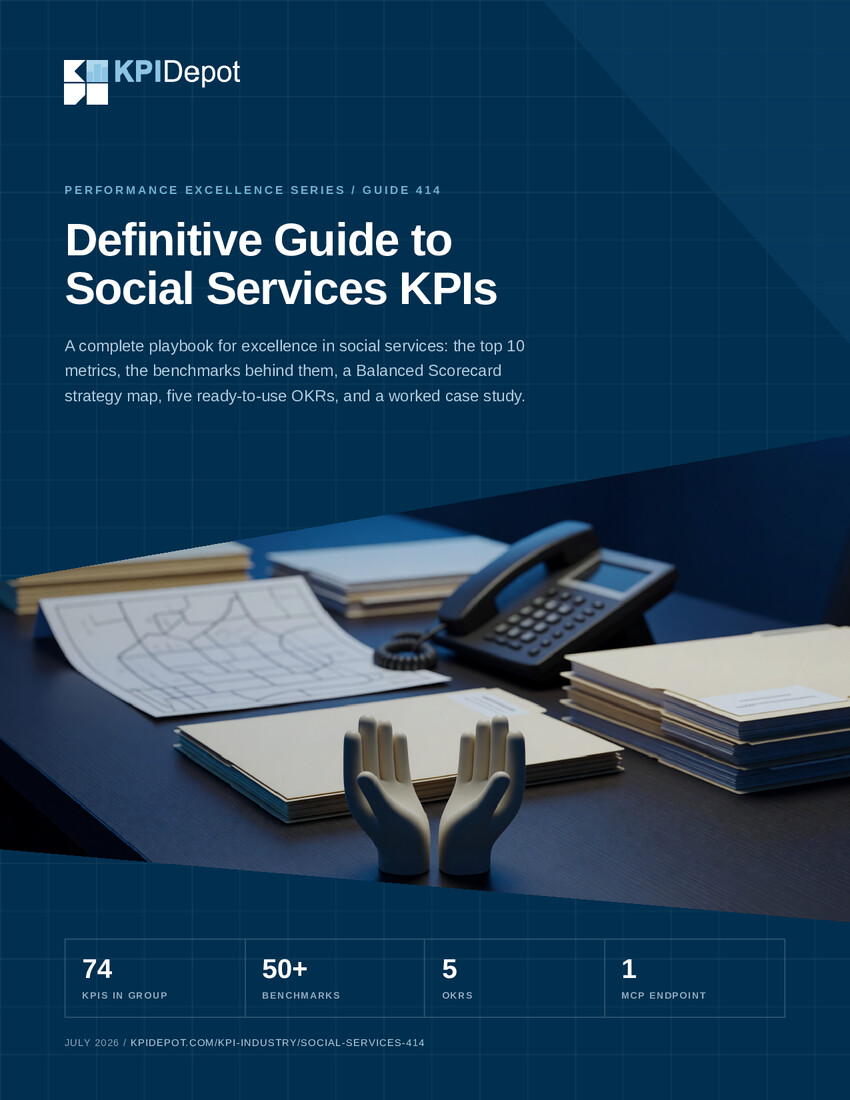
12 Most Important Social Services KPIs
The top KPIs in the Social Services industry are essential for measuring program effectiveness, resource allocation, and community impact. Impact KPIs, such as the number of individuals served, program success rates, and positive outcome percentages, measure social benefits.
Financial KPIs, including funding utilization rates, cost per beneficiary, and grant dependency ratios, ensure fiscal responsibility.
This article showcases the Most Critical 12 KPIs for Social Services and Associated Benchmarks.
1. Client Satisfaction Score
Client Satisfaction Score (CSS) serves as a vital indicator of customer loyalty and engagement, directly influencing revenue growth and retention rates.
High CSS correlates with repeat business and positive referrals, while low scores can signal underlying issues in product quality or service delivery. Organizations that prioritize CSS often see enhanced operational efficiency and improved financial health.
By leveraging analytical insights from CSS, executives can make data-driven decisions that align with strategic goals. Learn more about the Client Satisfaction Score KPI.
View Common Pitfalls
View Improvement Levers
We have 1 benchmark for this KPI available in our database.
Related KPI Categories
2. Crisis Response Time
Crisis Response Time is a critical KPI that measures how swiftly an organization reacts to unexpected events, influencing operational efficiency and financial health.
A shorter response time can mitigate risks, enhance customer trust, and improve overall business outcomes. In today’s volatile environment, timely crisis management can be the difference between maintaining market share and losing it.
Organizations that excel in this area often leverage data-driven decision-making to refine their strategies. Learn more about the Crisis Response Time KPI.
View Common Pitfalls
View Improvement Levers
We have 1 benchmark for this KPI available in our database.
Related KPI Categories
3. Client Retention Rate
Client Retention Rate is a vital KPI that reflects customer loyalty and satisfaction, directly impacting revenue stability and growth.
High retention rates correlate with increased lifetime value and reduced acquisition costs, enhancing overall financial health. Companies that excel in this metric often enjoy improved operational efficiency and stronger market positioning.
Tracking this KPI enables businesses to make data-driven decisions that align with strategic goals. Learn more about the Client Retention Rate KPI.
View Common Pitfalls
View Improvement Levers
We have 16 benchmarks for this KPI available in our database.
Related KPI Categories
4. Referral Rate
Referral Rate is a critical performance indicator that reflects customer satisfaction and loyalty.
High referral rates often correlate with increased customer acquisition and retention, leading to improved financial health. Companies that excel in this metric typically experience enhanced brand reputation and reduced marketing costs.
By leveraging data-driven decision making, organizations can track results and align strategies to optimize referral outcomes. Learn more about the Referral Rate KPI.
View Common Pitfalls
View Improvement Levers
We have 6 benchmarks for this KPI available in our database.
Related KPI Categories
5. Resource Allocation Efficiency
Resource Allocation Efficiency is crucial for optimizing financial health and ensuring strategic alignment across departments.
It directly influences operational efficiency, enabling organizations to allocate resources effectively and maximize ROI metrics. High efficiency in resource allocation leads to improved business outcomes, such as enhanced forecasting accuracy and better cost control metrics.
Companies that excel in this KPI can measure and track results more effectively, leading to superior performance indicators. Learn more about the Resource Allocation Efficiency KPI.
View Common Pitfalls
View Improvement Levers
We have 1 benchmark for this KPI available in our database.
Related KPI Categories
6. Volunteer Participation Rate
Volunteer Participation Rate is a critical KPI that measures the engagement of individuals in volunteer activities, influencing community impact and organizational reputation.
High participation rates can enhance brand loyalty and drive employee satisfaction, while low rates may signal disengagement or ineffective outreach strategies. Tracking this metric allows organizations to align their volunteer efforts with strategic goals, ultimately improving operational efficiency and community relations.
By leveraging data-driven insights, organizations can optimize their volunteer programs and enhance their overall financial health. Learn more about the Volunteer Participation Rate KPI.
View Common Pitfalls
View Improvement Levers
We have 10 benchmarks for this KPI available in our database.
Related KPI Categories
7. Volunteer Retention Rate
Volunteer Retention Rate (VRR) is a crucial KPI that indicates the effectiveness of engagement strategies in nonprofit organizations.
High retention rates correlate with increased volunteer satisfaction and long-term commitment, which ultimately drive mission success. Organizations with robust volunteer programs often see enhanced community impact and reduced recruitment costs.
By focusing on VRR, leaders can make data-driven decisions that foster loyalty and improve operational efficiency. Learn more about the Volunteer Retention Rate KPI.
View Common Pitfalls
View Improvement Levers
We have 1 benchmark for this KPI available in our database.
Related KPI Categories
8. Community Engagement Level
Community Engagement Level is a critical KPI that reflects how well an organization connects with its audience.
High engagement levels often correlate with increased customer loyalty, brand advocacy, and ultimately, revenue growth. Effective community engagement can enhance operational efficiency and drive strategic alignment across departments.
Organizations that prioritize this metric can make data-driven decisions that improve forecasting accuracy and ROI. Learn more about the Community Engagement Level KPI.
View Common Pitfalls
View Improvement Levers
We have 1 benchmark for this KPI available in our database.
Related KPI Categories
9. Stakeholder Engagement Level
Stakeholder Engagement Level is a critical performance indicator that reflects the degree of involvement and commitment from key stakeholders in an organization.
High engagement levels correlate with improved strategic alignment and operational efficiency, driving better business outcomes. Engaged stakeholders are more likely to support initiatives, leading to enhanced forecasting accuracy and effective management reporting.
Conversely, low engagement can result in misalignment, poor decision-making, and ultimately, diminished financial health. Learn more about the Stakeholder Engagement Level KPI.
View Common Pitfalls
View Improvement Levers
We have 1 benchmark for this KPI available in our database.
Related KPI Categories
10. Donor Satisfaction Score
Donor Satisfaction Score (DSS) serves as a critical performance indicator for organizations reliant on donor engagement.
High scores correlate with increased donor retention and enhanced lifetime value, driving sustainable revenue growth. By measuring donor sentiments, organizations can identify areas for improvement, leading to better fundraising strategies.
A robust DSS can also inform management reporting and data-driven decision-making, aligning operational efficiency with strategic goals. Learn more about the Donor Satisfaction Score KPI.
View Common Pitfalls
View Improvement Levers
We have 1 benchmark for this KPI available in our database.
Related KPI Categories
11. Social Return on Investment (SROI)
Social Return on Investment (SROI) quantifies the social value created by an organization relative to its financial investment.
This KPI matters because it helps organizations align their social initiatives with business outcomes, such as enhanced brand reputation and customer loyalty. By measuring SROI, executives can make data-driven decisions that improve operational efficiency and strategic alignment.
A higher SROI indicates effective resource allocation, while a lower value may signal inefficiencies or misalignment with community needs. Learn more about the Social Return on Investment (SROI) KPI.
View Common Pitfalls
View Improvement Levers
We have 3 benchmarks for this KPI available in our database.
Related KPI Categories
12. Emergency Preparedness Index
The Emergency Preparedness Index (EPI) is crucial for assessing an organization's readiness to respond to crises, impacting operational efficiency and risk management.
A high EPI indicates robust planning and resource allocation, which can minimize downtime and protect financial health. Conversely, a low EPI may expose vulnerabilities that lead to significant business disruptions and financial losses.
Organizations with strong EPI scores can better align their strategic initiatives with risk mitigation efforts, ensuring a more resilient operational framework. Learn more about the Emergency Preparedness Index KPI.
View Common Pitfalls
View Improvement Levers
We have 3 benchmarks for this KPI available in our database.
Related KPI Categories
These 9 KPIs were selected from the Social Services KPI database to provide a balanced view of operational efficiency, client outcomes, and stakeholder engagement. They combine leading indicators like Service Innovation Rate and Emergency Preparedness Index with lagging metrics such as Case Closure Rate and Client Retention Rate. This set captures both resource allocation and community impact, ensuring comprehensive performance measurement for Social Services teams.
Track Crisis Response Time alongside Emergency Preparedness Index—rising response times with declining preparedness indicate gaps in readiness protocols. Monitor Client Retention Rate in relation to Referral Rate; a high retention rate with low referrals signals strong client satisfaction but limited network growth. Resource Allocation Efficiency paired with Case Closure Rate reveals operational effectiveness—low efficiency with high closure rates may indicate resource strain or quality trade-offs.
Prioritize Crisis Response Time and Client Retention Rate first, as these KPIs are typically available from existing case management systems and offer immediate insights into service responsiveness and client loyalty. Follow with Resource Allocation Efficiency to assess operational leverage. The full suite of Social Services KPIs, including advanced metrics and benchmarks, is accessible in the KPI Depot database for deeper analysis and continuous improvement.
Related Best Practices
These best practice documents below are available for individual purchase from Flevy , the largest knowledge base of business frameworks, templates, and financial models available online.



