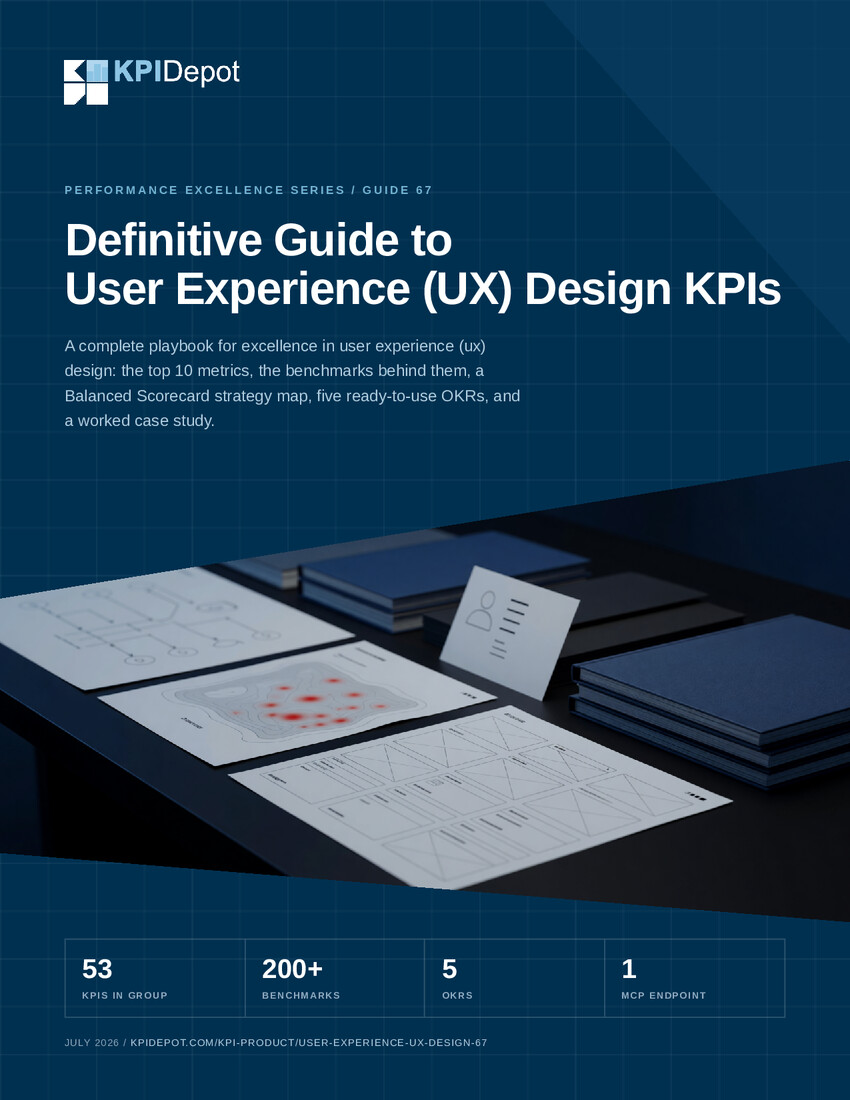
12 Most Important User Experience (UX) Design KPIs
The top KPIs are essential in UX Design as they provide quantifiable metrics that inform product management on how well a product meets user needs and expectations. By tracking specific indicators related to usability, satisfaction, and engagement, teams can identify areas of the user experience that require improvement.
KPIs help prioritize design and development efforts, ensuring that resources are allocated efficiently to enhance features that most significantly impact the user journey.
This article showcases the Most Critical 12 KPIs for User Experience (UX) Design and Associated Benchmarks.
1. User Satisfaction Score
User Satisfaction Score (USS) serves as a critical metric for understanding customer experiences and loyalty.
High scores correlate with increased retention, repeat purchases, and positive word-of-mouth, driving revenue growth. Organizations that prioritize user satisfaction often see improved operational efficiency and enhanced financial health.
Tracking this KPI enables data-driven decision-making, aligning teams around customer-centric goals. Learn more about the User Satisfaction Score KPI.
View Common Pitfalls
View Improvement Levers
We have 4 benchmarks for this KPI available in our database.
Related KPI Categories
2. Net Promoter Score (NPS)
Net Promoter Score (NPS) serves as a pivotal indicator of customer loyalty and satisfaction, directly influencing retention and referral rates.
High NPS correlates with increased customer lifetime value and lower churn, driving sustainable revenue growth. Organizations leveraging NPS effectively can align their strategies with customer expectations, enhancing operational efficiency and overall financial health.
This KPI acts as a leading indicator for future business outcomes, allowing executives to track results and make data-driven decisions. Learn more about the Net Promoter Score (NPS) KPI.
View Common Pitfalls
View Improvement Levers
We have 34 benchmarks for this KPI available in our database.
Related KPI Categories
3. Customer Effort Score (CES)
Customer Effort Score (CES) measures how easy it is for customers to interact with a company, influencing customer satisfaction, loyalty, and retention.
A lower CES indicates streamlined processes and higher operational efficiency, while a higher score often signals friction points that can lead to churn. Companies that prioritize reducing customer effort typically see improved financial health and stronger business outcomes.
By tracking CES, organizations can make data-driven decisions that enhance customer experiences and align with strategic goals. Learn more about the Customer Effort Score (CES) KPI.
View Common Pitfalls
View Improvement Levers
We have 6 benchmarks for this KPI available in our database.
Related KPI Categories
4. Task Success Rate
Task Success Rate is a critical KPI that measures the percentage of tasks completed successfully within a given timeframe.
It directly influences operational efficiency, resource allocation, and overall project success. High task success rates indicate effective processes and strong team performance, while low rates can signal inefficiencies or misalignment with strategic goals.
Organizations that prioritize this metric can enhance their management reporting and drive better data-driven decisions. Learn more about the Task Success Rate KPI.
View Common Pitfalls
View Improvement Levers
We have 3 benchmarks for this KPI available in our database.
5. Task Completion Rate
Task Completion Rate (TCR) is a critical performance indicator that reflects how effectively teams meet their objectives.
High TCR correlates with improved operational efficiency, better resource allocation, and enhanced employee engagement. Organizations with elevated TCRs often experience faster project delivery, leading to increased customer satisfaction and loyalty.
Conversely, low TCR can signal misalignment in strategic goals, ineffective processes, or inadequate resource management. Learn more about the Task Completion Rate KPI.
View Common Pitfalls
View Improvement Levers
We have 5 benchmarks for this KPI available in our database.
Related KPI Categories
6. Time to Complete a Task
Time to Complete a Task is a crucial KPI that reflects operational efficiency and impacts overall business outcomes.
It directly influences project delivery timelines, resource allocation, and customer satisfaction. A shorter completion time often correlates with improved financial health and better strategic alignment.
Organizations that effectively track this metric can enhance forecasting accuracy and make data-driven decisions. Learn more about the Time to Complete a Task KPI.
View Common Pitfalls
View Improvement Levers
We have 1 benchmark for this KPI available in our database.
7. Time on Task
Time on Task is a critical KPI that measures the duration employees spend on specific assignments, influencing operational efficiency and productivity.
High values can indicate inefficiencies or obstacles that hinder performance, while low values suggest streamlined processes and effective resource allocation. By tracking this metric, organizations can identify bottlenecks and enhance strategic alignment across teams.
Ultimately, improving Time on Task can lead to better business outcomes, including increased ROI and improved employee satisfaction. Learn more about the Time on Task KPI.
View Common Pitfalls
View Improvement Levers
We have 6 benchmarks for this KPI available in our database.
8. Error Rate
Error Rate is a critical KPI that reflects the accuracy of operational processes and customer satisfaction.
High error rates can lead to increased costs, diminished trust, and ultimately, lost revenue opportunities. By monitoring this metric, organizations can identify inefficiencies and enhance operational efficiency, driving better business outcomes.
Reducing error rates can also improve forecasting accuracy and financial health, enabling data-driven decision-making. Learn more about the Error Rate KPI.
View Common Pitfalls
View Improvement Levers
We have 2 benchmarks for this KPI available in our database.
Related KPI Categories
9. Abandonment Rate
Abandonment Rate is a critical KPI that measures the percentage of potential customers who initiate a transaction but fail to complete it.
This metric directly impacts revenue generation and customer acquisition costs, influencing overall financial health. High abandonment rates can indicate issues with user experience, pricing strategies, or product offerings.
By tracking results, organizations can identify areas for improvement and enhance operational efficiency. Learn more about the Abandonment Rate KPI.
View Common Pitfalls
View Improvement Levers
We have 5 benchmarks for this KPI available in our database.
Related KPI Categories
10. Conversion Rate
Conversion Rate is a crucial performance indicator that measures the effectiveness of marketing efforts in driving desired actions, such as purchases or sign-ups.
It directly influences revenue growth, customer acquisition costs, and overall ROI. High conversion rates signal effective engagement strategies, while low rates may indicate misalignment with target audiences or ineffective messaging.
Organizations that prioritize this metric can enhance operational efficiency and make data-driven decisions. Learn more about the Conversion Rate KPI.
View Common Pitfalls
View Improvement Levers
We have 9 benchmarks for this KPI available in our database.
Related KPI Categories
11. Engagement Rate
Engagement Rate serves as a critical performance indicator, reflecting how effectively a business connects with its audience.
High engagement rates often correlate with increased customer loyalty, brand awareness, and ultimately, revenue growth. This metric is essential for assessing the impact of marketing strategies and content effectiveness.
Companies leveraging engagement data can make informed, data-driven decisions to optimize campaigns and enhance operational efficiency. Learn more about the Engagement Rate KPI.
View Common Pitfalls
View Improvement Levers
We have 2 benchmarks for this KPI available in our database.
Related KPI Categories
12. Retention Rate
Retention Rate is a vital KPI that measures customer loyalty and satisfaction, directly impacting revenue stability and growth.
High retention rates often correlate with increased customer lifetime value and lower acquisition costs. Businesses that prioritize retention can achieve significant operational efficiency and strategic alignment, leading to improved financial health.
A strong retention strategy fosters a data-driven decision-making culture, enhancing overall business outcomes. Learn more about the Retention Rate KPI.
View Common Pitfalls
View Improvement Levers
We have 2 benchmarks for this KPI available in our database.
Related KPI Categories
These 12 User Experience (UX) Design KPIs were selected from the KPI Depot database to provide a comprehensive view across user perception, task efficiency, and behavioral outcomes. They balance leading indicators like Customer Effort Score (CES) and Task Success Rate with lagging metrics such as Net Promoter Score (NPS) and Retention Rate, covering the full user journey from initial interaction to long-term engagement.
Track Task Success Rate alongside Error Rate—rising errors with stagnant success rates indicate usability issues that require design iteration. Monitor Customer Effort Score in parallel with Abandonment Rate; a high CES paired with increasing abandonment signals friction points that block conversion. A rising Net Promoter Score with flat Retention Rate suggests satisfaction improvements are not yet translating into loyalty, highlighting gaps in post-experience engagement.
Prioritize User Satisfaction Score and Task Completion Rate first, as these are typically available from existing user feedback and analytics tools and provide immediate diagnostic value. Follow with Net Promoter Score to gauge advocacy and longer-term impact. The full set of UX Design KPIs, including advanced metrics beyond these 12, is accessible in the KPI Depot database for deeper analysis and benchmarking.
Related Best Practices
These best practice documents below are available for individual purchase from Flevy , the largest knowledge base of business frameworks, templates, and financial models available online.



