Website Traffic from International Sources is a critical performance indicator that reflects the global reach and effectiveness of digital marketing strategies.
It directly influences revenue growth, market expansion, and brand visibility across diverse regions.
By tracking this KPI, organizations can make data-driven decisions that enhance operational efficiency and improve ROI metrics.
Understanding international traffic patterns allows for better resource allocation and strategic alignment with market demands.
This metric serves as a leading indicator of potential business outcomes, guiding management reporting and forecasting accuracy.
Website Traffic from International Sources Interpretation
High values indicate strong global engagement and successful marketing efforts, while low values may suggest limited reach or ineffective campaigns. Ideal targets should align with the company's strategic goals and market potential.
- Above 30% – Strong international presence; consider further investment in global marketing.
- 15%–30% – Moderate engagement; assess regional strategies and optimize content.
- Below 15% – Weak international traffic; reevaluate marketing channels and tactics.
Website Traffic from International Sources Benchmarks
We have 13 relevant benchmarks in our benchmarks database.
Source: Subscribers only
Source Excerpt: Subscribers only
Additional Comments: Subscribers only
| Value | Unit | Type | Company Size | Time Period | Population | Industry | Geography | Sample Size |
| Subscribers only | percent | July 2021 | hotel website visitors | hotels | Germany |
Compare KPI Depot Plans Login
Source: Subscribers only
Source Excerpt: Subscribers only
Additional Comments: Subscribers only
| Value | Unit | Type | Company Size | Time Period | Population | Industry | Geography | Sample Size |
| Subscribers only | percent | July 2021 | hotel website visitors | hotels | Switzerland |
Compare KPI Depot Plans Login
Source: Subscribers only
Source Excerpt: Subscribers only
Additional Comments: Subscribers only
| Value | Unit | Type | Company Size | Time Period | Population | Industry | Geography | Sample Size |
| Subscribers only | percent | July 2021 | hotel website visitors | hotels | Austria |
Compare KPI Depot Plans Login
Source: Subscribers only
Source Excerpt: Subscribers only
Additional Comments: Subscribers only
| Value | Unit | Type | Company Size | Time Period | Population | Industry | Geography | Sample Size |
| Subscribers only | percent | Q2 2021 | hotel website traffic | hotels | Mexico & Caribbean |
Compare KPI Depot Plans Login
Source: Subscribers only
Source Excerpt: Subscribers only
Additional Comments: Subscribers only
| Value | Unit | Type | Company Size | Time Period | Population | Industry | Geography | Sample Size |
| Subscribers only | percent | Q2 2021 | hotel website traffic | hotels | Eastern Europe |
Compare KPI Depot Plans Login
Source: Subscribers only
Source Excerpt: Subscribers only
Additional Comments: Subscribers only
| Value | Unit | Type | Company Size | Time Period | Population | Industry | Geography | Sample Size |
| Subscribers only | percent | Q2 2021 | hotel website traffic | hotels | Middle East & Africa |
Compare KPI Depot Plans Login
Source: Subscribers only
Source Excerpt: Subscribers only
Additional Comments: Subscribers only
| Value | Unit | Type | Company Size | Time Period | Population | Industry | Geography | Sample Size |
| Subscribers only | percent | Q2 2021 | hotel website traffic | hotels | Southern Europe |
Compare KPI Depot Plans Login
Source: Subscribers only
Source Excerpt: Subscribers only
Additional Comments: Subscribers only
| Value | Unit | Type | Company Size | Time Period | Population | Industry | Geography | Sample Size |
| Subscribers only | percent | Q2 2021 | hotel website traffic | hotels | South East Asia |
Compare KPI Depot Plans Login
Source: Subscribers only
Source Excerpt: Subscribers only
Additional Comments: Subscribers only
| Value | Unit | Type | Company Size | Time Period | Population | Industry | Geography | Sample Size |
| Subscribers only | percent | Q2 2021 | hotel website traffic | hotels | Western Europe |
Compare KPI Depot Plans Login
Source: Subscribers only
Source Excerpt: Subscribers only
Additional Comments: Subscribers only
| Value | Unit | Type | Company Size | Time Period | Population | Industry | Geography | Sample Size |
| Subscribers only | percent | Q2 2021 | hotel website traffic | hotels | Latin America |
Compare KPI Depot Plans Login
Source: Subscribers only
Source Excerpt: Subscribers only
Additional Comments: Subscribers only
| Value | Unit | Type | Company Size | Time Period | Population | Industry | Geography | Sample Size |
| Subscribers only | percent | Q2 2021 | hotel website traffic | hotels | Australasia |
Compare KPI Depot Plans Login
Source: Subscribers only
Source Excerpt: Subscribers only
Additional Comments: Subscribers only
| Value | Unit | Type | Company Size | Time Period | Population | Industry | Geography | Sample Size |
| Subscribers only | percent | Q2 2021 | hotel website traffic | hotels | Northern Europe |
Compare KPI Depot Plans Login
Source: Subscribers only
Source Excerpt: Subscribers only
Additional Comments: Subscribers only
| Value | Unit | Type | Company Size | Time Period | Population | Industry | Geography | Sample Size |
| Subscribers only | percent | Q2 2021 | hotel website traffic | hotels | North America |
Compare KPI Depot Plans Login
Common Pitfalls
Many organizations overlook the nuances of international traffic, leading to misguided strategies and wasted resources.
- Failing to localize content can alienate potential customers. Generic messaging often misses cultural nuances, reducing engagement and conversion rates.
- Neglecting mobile optimization limits accessibility for international users. A significant portion of global traffic comes from mobile devices, and poor mobile experiences can drive users away.
- Ignoring regional analytics can obscure performance insights. Without understanding local behaviors, businesses may misallocate resources and miss growth opportunities.
- Overlooking compliance with local regulations can lead to penalties. Each region has unique laws regarding data privacy and advertising, which must be respected to maintain credibility.






















Improvement Levers
Enhancing international website traffic requires targeted strategies that resonate with diverse audiences.
- Invest in localized SEO strategies to improve visibility in international markets. Tailoring keywords and content to local languages and preferences can significantly boost organic traffic.
- Utilize social media platforms popular in target regions to engage users. Creating region-specific campaigns can enhance brand awareness and drive traffic from social channels.
- Implement A/B testing for different markets to optimize user experience. Testing various layouts, content, and calls to action can reveal what resonates best with international visitors.
- Leverage partnerships with local influencers to expand reach. Collaborations can enhance credibility and attract new audiences in specific regions.
Website Traffic from International Sources Case Study Example
A global e-commerce company, operating in over 50 countries, faced stagnating international website traffic despite robust domestic growth. After analyzing their Website Traffic from International Sources, they discovered that only 12% of visitors came from outside their home market. This prompted a strategic overhaul of their digital marketing approach, focusing on localization and targeted outreach.
The company initiated a comprehensive localization strategy, translating their website into multiple languages and optimizing content for local search engines. They also launched region-specific marketing campaigns, engaging local influencers to promote their products. As a result, international traffic surged by 45% within 6 months, significantly contributing to overall sales growth.
In addition, they implemented a robust analytics framework to continuously monitor international traffic patterns. This allowed them to adapt strategies in real-time, ensuring they remained aligned with evolving market demands. The company also invested in mobile optimization, recognizing that a significant portion of their international audience accessed the site via smartphones.
By the end of the fiscal year, international sales accounted for 25% of total revenue, a remarkable increase from just 10% the previous year. The success of this initiative not only improved their financial health but also positioned the company as a leading player in the global e-commerce space.
Related KPIs
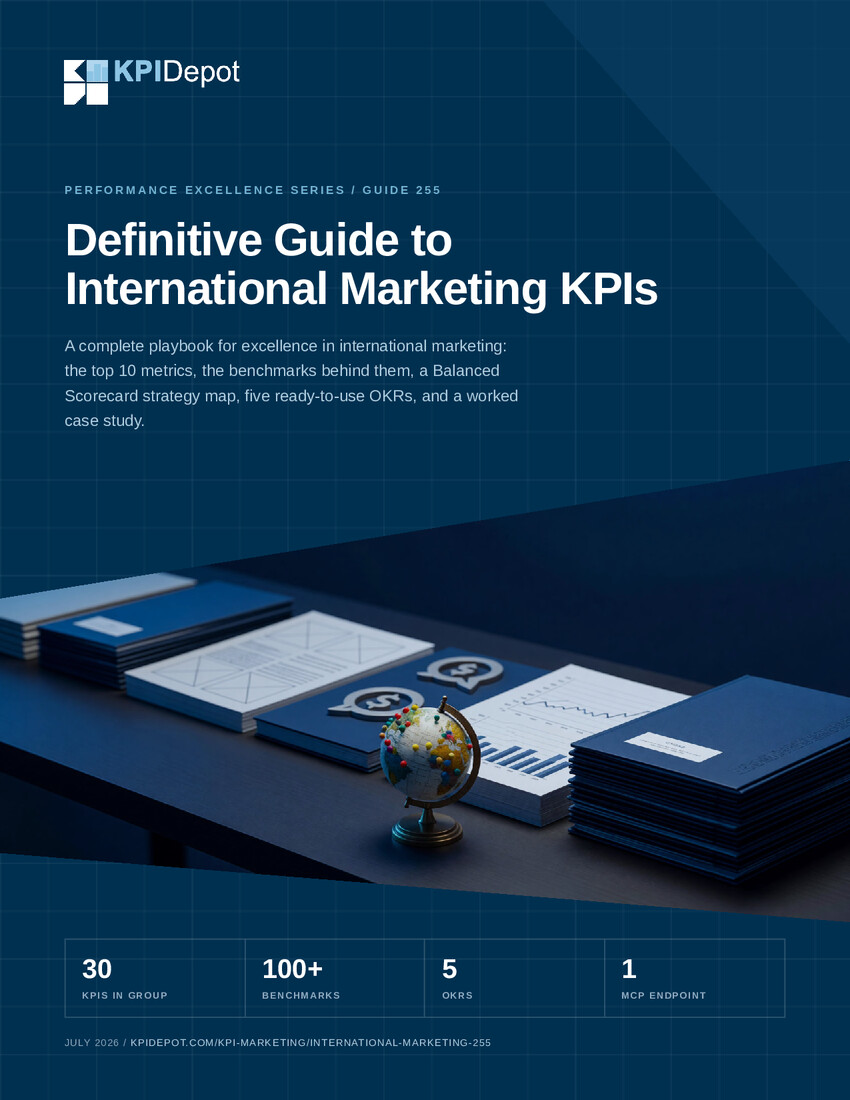
KPI Categories
This KPI is associated with the following categories and industries in our KPI database:


KPI Depot takes you from KPI intelligence to finished deliverable. Consultants, strategy teams, FP&A leaders, and analytics teams use it to answer the two hardest questions in performance management, what to measure and what the target should be, and then to produce the scorecard itself.
The difference is intelligence, not just data. Anyone can list metrics. Every KPI in KPI Depot carries 13 practical attributes, from formula and measurement approach to diagnostic questions, risk warnings, and Balanced Scorecard perspective, across 15 corporate functions and 153 industries. And every target you set is grounded in our database of 34,304 source-attributed benchmarks, each detailing metric value, company size, time period, industry, geography, sample size, and source. Benchmark data at this scale is otherwise the domain of research services costing thousands to hundreds of thousands of dollars per year.
When your metrics are selected, KPI Depot finishes the job: export an interactive Strategy Map, a Balanced Scorecard with formulas and tracking columns, or a CSV KPI pack, and go from research to working deliverable in hours instead of weeks.
Formerly the Flevy KPI Library, KPI Depot is trusted by teams at organizations including Accenture, EY, IBM, PepsiCo, Samsung, and Vodafone.
Got a question? Email us at [email protected].
FAQs about Website Traffic from International Sources
Why is international website traffic important?
International website traffic is crucial for businesses looking to expand their market presence and increase revenue. It provides insights into global customer preferences and helps tailor marketing strategies accordingly.
How can I track international traffic effectively?
Utilizing web analytics tools like Google Analytics can help track international traffic sources and user behavior. Setting up specific goals and segments for different regions enhances the analysis.
What are the best practices for localizing content?
Best practices include translating content accurately, adapting cultural references, and optimizing for local search engines. Engaging local experts can ensure the content resonates with the target audience.
How does mobile optimization affect international traffic?
Mobile optimization is vital as many international users access websites via mobile devices. A seamless mobile experience can significantly improve engagement and conversion rates.
What role do social media platforms play in driving international traffic?
Social media platforms are essential for reaching diverse audiences globally. Tailored campaigns on popular platforms in specific regions can enhance brand visibility and attract international visitors.
Can international traffic impact overall business performance?
Yes, increased international traffic can lead to higher sales and market share. It also provides opportunities for businesses to diversify revenue streams and reduce dependency on domestic markets.
Each KPI in our knowledge base includes 13 attributes.
KPI Definition
A clear explanation of what the KPI measures
Potential Business Insights
The typical business insights we expect to gain through the tracking of this KPI
Measurement Approach
An outline of the approach or process followed to measure this KPI
Standard Formula
The standard formula organizations use to calculate this KPI
Trend Analysis
Insights into how the KPI tends to evolve over time and what trends could indicate positive or negative performance shifts
Diagnostic Questions
Questions to ask to better understand your current position is for the KPI and how it can improve
Actionable Tips
Practical, actionable tips for improving the KPI, which might involve operational changes, strategic shifts, or tactical actions
Visualization Suggestions
Recommended charts or graphs that best represent the trends and patterns around the KPI for more effective reporting and decision-making
Risk Warnings
Potential risks or warnings signs that could indicate underlying issues that require immediate attention
Tools & Technologies
Suggested tools, technologies, and software that can help in tracking and analyzing the KPI more effectively
Integration Points
How the KPI can be integrated with other business systems and processes for holistic strategic performance management
Change Impact
Explanation of how changes in the KPI can impact other KPIs and what kind of changes can be expected
BSC Perspective
NEW Mapping to a Balanced Scorecard perspective (financial, customer, internal process, learning & growth)
Explore KPI Depot by Function & Industry

